

In the Orthodox Sacred Tradition the three phases of sanctification are purification, illumination, and deification (theosis). Simply put, it’s the process to purify the soul while a person is still alive. To enable each person to restore the likeness of God and become a living icon of God.
The ethos, having been set by Jesus Christ and his Holy Apostles who ultimately lived glorified lives by experience, is perpetuated in an unbroken chain by the succession of saints and monastics who followed. One of those great men is Saint John Climacus, abbot of Mount Sinai Monastery in Egypt. Saint John wrote this work especially for monastics, but it has been used by laypeople alike.
To quote Metropolitan Philaret “We see how one virtue leads to another, as a man rises higher and higher and finally attains to that height where their abides the crown of the virtues, which is called ‘Christian love”… Now, if the Christian, who is ascending upon this ladder of spiritual perfection by his struggles and ascetic labours, ceases from this work and ascetic toil, his soul will not remain in its former condition; but like a stone, it will fall to the earth. More and more quickly will it drop until, finally, if the man does not come to his senses, it will cast him down into the very abyss of Hell.”
Step 1
On renunciation of the world
3. God belongs to all free beings. He is the life of all, the salvation of all – faithful and unfaithful, just and unjust, pious and impious, passionate and dispassionate, monks and laymen, wise and simple, healthy and sick, young and old – just as the effusion of light, the sight of the sun, and the changes of the seasons are for all alike; ‘for there is no respect of persons with God.’ (Romans 2:11)
.
.
.
5. All who have willingly left the things of the world, have certainly done so for the sake of the future Kingdom, or because of the multitude of their sins, or for love of God. If they were not moved by any of these reasons, their withdrawal from the world was unreasonable. But God who sets our contests waits to see what the end of our course will be.
.
.
.
10. Those who enter the contest must renounce all things, despise all things, deride all things, and shake off all things, that they may lay a firm foundation. A good foundation of three layers and three pillars is innocence, fasting, and temperance. Let all babes in Christ begin with these virtues, taking as their model the natural babes. For you never find anything in them sly or deceitful. They have no insatiate appetite, no insatiable stomach, no body on fire, or raging like a beast; but perhaps as they grow, in proportion as they take more food, their natural passions also increase.
.
.
.
13. The man who renounces the world from fear is like burning incense, that begins with fragrance but ends in smoke. He who leaves the world through hope of reward is like a millstone, that always moves in the same way.* But he who withdraws from the world out of love for God has obtained fire at the very outset; and, like fire set to fuel, it soon kindles a larger fire.
* That is, revolves round itself, is self-centered.
.
.
.
20. If an earthly king were to call us and request us to serve in his presence, we should not delay for other orders, we should not make excuses, but we should leave everything and eagerly go to him. Let us then be on the alert, lest when the King of kings and Lord of lords and God of gods calls us to his heavenly office, we beg off out of sloth and cowardice and find ourselves without excuse at the Last Judgment. It is possible to walk, even when tied with the fetters of worldly affairs and iron cares, but only with difficulty. For even those who have iron chains on their feet can often walk; but they are continually stumbling and getting hurt. An unmarried man, who is only tied to the world by business affairs, is like one who has fetters on his hands; and therefore, when he wishes to hasten to the monastic life, he has nothing to hinder him. But the married man is like one who is bound hand and foot.
.
.
.
21. Some people living carelessly in the world have asked me: ‘We have wives and are beset with social cares, and how can we lead the solitary life?’ I replied to them: ‘Do all the good you can; do not speak evil of anyone; do not steal from anyone; do not lie to anyone; do not be arrogant towards anyone; do not hate anyone; do not be absent from the divine services; be compassionate to the needy; do not offend anyone; do not wreck another man’s domestic happiness, and be content with what your own wives can give you. If you behave in this way, you will not be far from the Kingdom of Heaven.’
Source Credit: The Ladder of Divine Ascent (ISBN 978-0-943405-03-2) Holy Transfiguration Monastery – Brookline, Massachusetts

Step 2
On detachment
The man who really loves the Lord, who has made a real effort to find the future Kingdom, who is really pained by his sins, who is really mindful of eternal torment and judgment, who really lives in fear of his own departure, will not love, care, or worry about money, or possessions, or parents, or worldly glory, or friends, or brothers, or anything at all on earth. But having shaken off all ties with earthly things and having stripped himself of all his cares, and having come to hate even his own flesh, and having stripped himself of everything, he will follow Christ without anxiety or hesitation, always looking Heavenward and expecting help from there, according to the word of the saint: My soul hath cleaved after Thee (Psalm 62:8); and according to that other ever-memorable man who said: I have not wearied of following Thee, nor have I desired the day or rest of man, O Lord. (Jeremiah 17:16)
.
.
.
3. After our renunciation of the world, the demons suggest to us that we should envy those living in the world who give alms and console [the needy], and be sorry for ourselves as deprived of those virtues. The aim of our foes is, by false humility, either to make us return to the world, or, if we remain monks, to plunge us into despair. It is possible to belittle those living in the world out of conceit; and it is also possible to disparage them behind their backs in order to avoid despair and to obtain hope.
.
.
.
5. Having resolved to run our race with ardour and fervour, let us consider carefully how the Lord gave judgment concerning all living things in the world, speaking of those who are alive as dead, when he said to someone: Leave those in the world who are dead to bury the dead in body (Matthew 8:22). His wealth did not in the least prevent the young man from being baptized. And so it is in vain that some say that the Lord commanded him to sell what he had for the sake of baptism. This* is more than sufficient to give us the most firm assurance of the surpassing glory of our vow.
* I.e. the story of the rich young man
.
.
.
9. No one will enter the heavenly bridechamber wearing a crown unless he makes the first, second, and third renunciation. I mean the renunciation of all concerns, and people, and parents; the cutting out of one’s will; and the third renunciation, of conceit that dogs obedience. ‘Come out from among them, and be ye separate,’ saith the Lord, ‘and touch not the impurity of the world’ (2 Corinthians 6:17). For who amongst them has ever worked any miracles? Who has raised the dead? Who has driven out devils? No one. All these are the victorious rewards of monks, rewards which the world can’t receive; and if it could, then what is the need of ascetism and solitude?
.
.
.
11. If anyone thinks he is without attachment to some object, but is grieved at its loss, then he is completely deceiving himself.
.
.
.
12. If young people who are prone to the desires of physical love and to luxurious ways wish to enter the monastic life, let them exercise themselves in all sobriety and prayer, and persuade themselves to abstain from all luxury and guile, lest their last state be worse than their first (Matthew 12:45). This harbour provides safety, but also exposes one to danger. Those who sail the spiritual seas know this. For it is a pitiful sight to behold those who have survived perils at sea suffering shipwreck in the harbour.
.
.
.
This is the second step. Let those who run the race imitate not Lot’s wife, but Lot himself, and flee.
Source Credit: The Ladder of Divine Ascent (ISBN 978-0-943405-03-2) Holy Transfiguration Monastery – Brookline, Massachusetts

Step 3
On exile
Exile means that we leave forever everything in our own country that prevents us from reaching the goal of piety. Exile means modest manners, wisdom which remains unknown, prudence not recognized as such by most, a hidden life, an invisible intention, unseen meditation, desire for humiliation, longing for hardship, constant determination to love God, abundance of love, renunciation of vainglory, depth of silence.
.
.
.
4. In hastening to solitude and exile, do not wait for world-loving souls, because the thief comes unexpectedly. In trying to save the careless and indolent along with themselves, many perish with them, because in course of time the soul’s fire goes out. As soon as the flame is burning within you, run; for you do not know when it will go out and leave you in darkness. Not all of us are required to save others. The divine Apostle says: ‘Everyone of us shall give an account of himself to God.’ (Romans 14:12) And again he says: ‘Though therefore that teaches another, dost thou not teach thyself?’ (Romans 2:21) This is like saying: I do not know whether we must all teach others; but we must certainly teach ourselves.
.
.
.
5. In going into exile, beware of the demon of drifting and of sensual desire; because exile gives him opportunity.
.
.
.
7. Have you become an exile from the world? Do not touch the world anymore; because the passions desire nothing better than to return.
.
.
.
8. Eve was exiled from Paradise against her will, but the monk is a willing exile from his home. She would have liked the tree of disobedience again; and he would certainly expose himself daily to frequent danger from relatives according to the flesh.
.
.
.
9. Run from places of sin as from the plague. For when fruit is not present, we have no frequent desire to eat it.
.
.
.
11. When we have lived a year or two away from our family, and have acquired some piety or contrition or continence, then vain thoughts begin to rise up in us and urge us to go again to our homeland, ‘for the edification of many,’ they say, ‘and as an example, and for the profit of those who saw our former lax life.’ And if we possess the gift of eloquence and some shreds of knowledge, the thought occurs to us that we could be saviours of souls and teachers in the world, that we may waste in the sea what we have gathered so well in the harbour. Let us try to imitate not Lot’s wife, but Lot himself. For when a soul turns back to what it has left, like salt, it loses its savour and becomes henceforth useless. (Genesis 19:26) (Matthew 5:23) Run from Egypt without looking back; because the hearts which look back upon it with affection shall not see Jerusalem, the land of dispassion*. Those who left their own people in childlike simplicity at the beginning, and have since been completely purified, may profitably return to their former land, perhaps even with the intention, after saving themselves, of saving others too. Yet Moses, who was allowed to see God Himself and was sent by God for the salvation of his own people, met many dangers in Egypt, that is to say, dark periods in the world.
* ‘Dispassion,’ Greek ἀπάθεια, Jerusalem means ‘City of Peace.’ The only true peace is freedom from passion, and the technical word for this is ‘dispassion.’
.
.
.
13. He is an exile who, having knowledge, sits like one of foreign speech amongst people of another tongue.
.
.
.
18. For our solitary life let us choose places where there are fewer opportunities from comfort and ambition, but more for humility. Otherwise, we shall be fleeing in company with our passions.
.
.
.
19. Hide your noble birth and do not glory in your distinction, lest you be found to be one thing in word and another in deed.
.
.
.
22. When men or demons praise us for our exile, as for some great exploit or achievement, then let us think of Him who for our sake was exiled from Heaven to earth, and we shall find that throughout all eternity it is impossible for us to make return for this.
.
.
.
23. Attachment either to some particular relative or to strangers is dangerous. Little by little it can entice us back to the world, and completely quench the fire of our compunction. It is impossible to look at the sky with one eye and at the earth with the other, and it is equally impossible for anyone not to expose his soul to danger who has not separated himself completely, both in thought and body, from his own relatives and others.
Concerning dreams that beginners have
25. It is impossible to hide the fact that our mind, which is the organ of knowledge, is extremely imperfect and full of all kinds of ignorance. The palate distinguishes different foods, the hearing discerns thoughts, the sun reveals the weakness of the eyes, and words betray a soul’s ignorance. But the law of love is an incentive to attempt things that are beyond our capacity. And so I think (but I do not dogmatize) that after a chapter on exile, or rather in this very chapter, something should be inserted about dreams, so that we may not be in the dark concerning this trickery of our wily foes.
.
.
.
27. The reason we have decided to speak about dreams here is obvious. When we leave our homes and relatives for the Lord’s sake, and sell ourselves into exile for the love of God, then the demons try to disturb us with dreams, representing to us that our relatives are either grieving or dying, or are held captive for our sake and are destitute. But he who believes in dreams is like a person running after his own shadow and trying to catch it.
.
.
.
28. The demons of vainglory prophesy in dreams. Being unscrupulous, they guess the future and foretell it to us. When these visions come true, we are amazed; and we are elated with the thought that we are already near to the gift of foreknowledge. A demon is often a prophet to those who believe him, but he is always a liar to those who despise him. Being a spirit, he sees what is happening in this lower air, and noticing that someone is dying, he foretells it through dreams to the more light-minded. But the demons know nothing about the future from foreknowledge. For if they did, then the fortunetellers would also be able to foretell our death.
.
.
.
29. Demons often transform themselves into angels of light, and take the form of martyrs, and make it appear to us during sleep that we are communicating with them. Then, when we wake up, they plunge us into unholy joy and deceit. But you can detect their deceit by this very fact. For angels reveal torments, judgements, and separations; and when we wake up we find that we are trembling and sad. As soon as we begin to believe the demons in dreams, then they make sport of us when we are awake too. He who believes in dreams is completely inexperienced. But he who distrusts all dreams is a wise man. Only believe dreams that warn you of torments and judgements. But if despair afflicts you, then such dreams are also from demons.
.
.
.
This is the third step, which is equal in number to the Trinity. He who has reached it, let him not look to the right hand nor to the left.
Source Credit: The Ladder of Divine Ascent (ISBN 978-0-943405-03-2) Holy Transfiguration Monastery – Brookline, Massachusetts

Step 4
On blessed and ever-memorable obedience
Our treatise now appropriately touches upon warriors* and athletes of Christ. As the flower precedes the fruit, so exile, either of body or will, always precedes obedience. For with the help of these two virtues, the holy soul steadily ascends to Heaven as upon golden wings. And perhaps it was about this that he who had received the Holy Spirit sang: Who will give me wings like a dove? And I will fly by activity, and be at rest by divine vision and humility. (Psalm 54:6)
* Greek, πήκται, ‘prizefighters.’
.
.
.
3. Obedience is absolute renunciation of our own life, clearly expressed in our bodily actions. Or, conversely, obedience is the mortification of the limbs while the mind remains alive. Obedience is unquestioning movement, voluntary death, a life free of curiosity, carefree danger, unprepared defence before God, fearlessness of death, a safe voyage, a sleeper’s progress. Obedience is the tomb of the will and the resurrection of humility. A corpse does not not argue or reason as to what is good or what seems to be bad. For he who has devoutly put the soul of the novice to death will answer for everything. Obedience is an abandonment of discernment in a wealth of discernment.
.
.
.
4. The beginning of the mortification both of the soul’s desire and of the bodily members is much hard work. The middle is sometimes laborious and sometimes not laborious. But the end is insensibility and insusceptibility to toil and pain. Only when he sees himself doing his own will does this blessed living corpse feel sorry and sick at heart; and he fears the responsibility of using his own judgement.
.
.
.
5. You that have decided to strip for the arena of this spiritual confession, you that wish to take on your neck the yoke of Christ, you that are therefore trying to lay your own burden on another’s shoulder’s, you that are hastening to sign a pledge that you are voluntarily surrendering yourself to slavery, and in return want freedom written to your account, you that are being supported by the hands of others as you swim across this great sea — you should know that you have decided to travel by a short but rough way from which there is only one erring path, and it is called self-rule*. But he who has renounced this entirely, even in things that seem to be good and spiritual and pleasing to God, has reached the end before setting out on his journey. For obedience is distrust of oneself in everything, however good it may be, right to the end of one’s life.
* Or, ‘self-will,’ ‘independence,’ ‘setting your own pace’; Greek ίδιορρυθμία
.
.
.
6. When motives of humility and real longing for salvation incite us to bend our neck and entrust ourselves to another in the Lord, before entering upon this life, if there is any cleverness and prudence in us, we ought first to question and examine, and even, so to speak, test our helmsman, so as not to mistake the sailor for the pilot, a sick man for a doctor, a passionate for a dispassionate man, the sea for a harbour, and so bring about the speedy shipwreck of our soul. But when once we have entered the arena of piety and obedience, we must no longer judge our good manager* in any way at all, even though we may perhaps see in him some slight failings, since he is only human. Otherwise, by sitting in judgement we shall get no profit from our subjection.
* Lit. ‘the one who arranges the contests or races, and sets the handicaps,’ hence, ‘the president,’ ‘umpire’ or ‘judge of the races.’
.
.
.
8. The fathers have laid down that psalmody is a weapon, and prayer is a wall, and honest tears are a bath; but blessed obedience in their judgement is confession of faith, without which no one subject to passions will see the Lord.
.
.
.
9. He who submits himself, passes sentence on himself. If his obedience for the Lord’s sake is perfect, even if it does not seem perfect, he will escape judgement. But if he does his own will in some things, then although he considers himself obedient, he lays the burden on his own shoulders. It is good if the superior does not cease reproving him; but if he is silent, then I do not know what to say. Those who submit themselves in the Lord in simplicity run the good race without provoking the cunning of the demons against themselves by their exacting investigations.
.
.
.
10. First of all, let us make our concession to our good judge, and to him alone. But if he orders, then to all. Wounds displayed in public will not grow worse, but will be healed.
.
.
.
41. At a distance of a mile from the great monastery was a place called the Prison, deprived of every comfort. There neither smoke, nor wine, nor oil in the food, nor anything else could ever be seen, but only bread and light vegetables. Here the pastor shut up, without permission to go out, those who fell into sin after entering the brotherhood; and not all together, but each in a separate and special cell, or at most in pairs. And he kept them there until the Lord gave him assurance of the amendment of each one. Over them he placed the subprior, a great man called Isaac, who required of those entrusted to him almost unceasing prayer. And to prevent despondency, they had a large quantity of palm leaves.* Such is the life, such is the rule, such is the conduct of those who truly seek the face of the God of Jacob! (Psalm 23:6)
* Palm leaves were used for making baskets.
.
.
.
42. To admire the labours of the saints is good; to emulate them wins salvation; but to wish suddenly to imitate their life in every point is unreasonable and impossible.
.
.
.
44. Blessed is he who, though maligned and disparaged everyday for the Lord’s sake, constrains himself to be patient. He will join the chorus of the martyrs, and boldly converse with the angels. Blessed is the monk who regards himself as hourly deserving every dishonour and disparagement. Blessed is he who mortifies his will to the end, and leaves the care of himself to his director in the Lord; for he will be placed at the right hand of the Crucified. He who will not accept a reproof, just or unjust, renounces his own salvation. But he who accepts it with an effort, or even without an effort, will soon receive the remission of his sins.
.
.
.
48. He whose will and desire in conversation is to establish his own opinion, even though what he says is true, should recognize that he is sick with the devil’s disease. And if he behaves like this only in conversation with his equals, then perhaps the rebuke of his superiors may heal him. But if he acts in this way even with those who are greater and wiser than he, then his malady is humanly incurable.
.
.
.
49. He who is not submissive in speech, clearly will not be so in act either. For he who is unfaithful in little is also unfaithful in much, and is intractable (Luke 16:10). He labours in vain, and he will get nothing from holy obedience but his own doom.
.
.
.
50. If anyone has his conscience in the utmost purity in the matter of obedience to his spiritual father, then he daily awaits death as if it were sleep, or rather life, and is not dismayed, knowing for certain that at the time of his departure, not he, but his director, will be called to account.
.
.
.
51. If, without constraint, anyone receives some task from his father, and in doing it suffers a stumble, he should not ascribe the blame to the giver but to the receiver of the weapon. For he took the weapon for battle against the enemy, but has turned it against his own heart. But if he forced himself for the Lord’s sake to accept the task, though he previously explained his weakness to him who gave it, let him take courage; for though he has fallen, he is not dead.
.
.
.
54. When, in the absence of the superior, we imagine his face and think that he is always standing by us, and avoid every meeting, or word, or food, or sleep, or anything else that we think he would not like, then we have really learnt true obedience. Baseborn children regard the absence of their teacher as a joy, but legitimate ones think it a loss.
.
.
.
55. I once asked one of the most experienced fathers, and pressed him to tell me how humility is obtained by obedience. He said: “The obedient man who has discernment, even if he raises the dead and receives the gift of tears and freedom from conflict, will still think that it is the prayer of his spiritual father that has done it, and he remains foreign and alien to vain presumption. For how could he possibly pride himself on what is done, as he himself admits, by the help of his father, and not by his own effort?
.
.
.
56. But the practice of the above virtues is unknown to the solitary.* For his rigours have brought him conceit and suggest to him that his achievements are due to his own effort.
* Greek ήσυχαστής
.
.
.
57. He who lives in obedience has eluded two snares* and remains eternally an obedient servant of Christ.
* The two snares which he speaks of are disobedience and conceit.
.
.
.
58. The devil battles with those in obedience, sometimes to defile them with bodily pollutions, and make them hard-hearted, and sometimes to make them more agitated than usual. At other times, he makes them dry and barren, sluggish in prayer, drowsy and benighted, in order to tear them away from their struggle by making them think they have gained nothing by their obedience, but are only backsliding. For he does not allow them time to reflect that often the providential withdrawal of our imagined goods or blessings leads us to the deepest humility.
.
.
.
59. Some have often repelled that deceiver by patience; but while he is still speaking, another angel* stands by us, and after a little while tries to hoodwink us in another way. I have seen some living in obedience who, through their father’s direction, became filled with compunction, meek, temperate, zealous, free from inner conflicts, and fervent. But demons came to them and sowed in them the thought that they now had the qualifications for the solitary life,** and that in stillness, they would attain to freedom from passion*** as the final prize. Thus deceived, they left the harbour and put out to sea, but when a storm came down upon them they were pitifully exposed to danger from this foul and briny ocean, through being unprovided with pilots.
* I.e. devil, ** Greek ήσυχία , *** Or, ‘dispassion’
.
.
.
61. He who is sometimes obedient to his father and sometimes disobedient is like a person who sometimes puts lotion in his eyes and sometimes quicklime. For it is said, When one builds and another pulls down, what profit have they had but the labour? (Ecclesiastes 34:23)
.
.
.
62. Do not be deceived, son and obedient servant of the Lord, by the spirit of conceit, so that you confess your own sins to your master as if they were another person’s. You cannot escape shame except by shame. It is often the habit of the demons to persuade us either not to confess, or to do so as if we were confessing another person’s sins, or to lay the blame for our sin on others. Lay bare, lay bare your wound to the physician and, without being ashamed, say: ‘It is my wound, Father, it is my plague, caused by my own negligence, and not by anything else. No one is to blame for this, no man, no spirit, no body, nothing but my own carelessness.’
.
.
.
64. If everything depends on habit, and follows upon it, then still more do the virtues depend on habit, for they have God as their great fellow labourer.
.
.
.
66. Do not think that it is improper to make your confession to your helper, as to God, in a prostrate position. I have seen condemned criminals, by their sorry appearance and violent confession and entreaty, soften the severity of the judge and change his anger into mercy. That is why even John the Baptist required confession before baptism of those who came to him, not because he himself needed to know their sins, but so as to effect their salvation.
.
.
.
67. Let us not be surprised if, even after confession, we are still attacked; for it is better to war with pollutions* than with conceit.
* Some versions read ‘thoughts.’
.
.
.
68. Do not be over-eager and do not be carried away when you hear tales of the hesychasts and anchorites. For you are marching in the army of the First Martyr. And if you fall, do not leave the practice-ground, for then especially, more than ever, we need a physician. He who strikes his foot against a stone when he has help, would certainly not only have stumbled unaided but would have died.
.
.
.
70. When a physician protests his incompetence, then you have to go to another, because few are healed without a physician. And who would think of contradicting us when we say that every ship that encounters shipwreck with a skilled pilot would be utterly lost without a pilot?
.
.
.
71. From obedience comes humility, and from humility comes dispassion; for in our humility the Lord remembered and redeemed us from our enemies. (Psalm 135:23-24) Therefore nothing prevents us from saying that from obedience comes dispassion, through which the goal of humility is attained. For humility is the beginning of dispassion, as Moses is the beginning of the Law; and the daughter perfects the mother, as Mary perfects the synagogue.
.
.
.
72. Those sick souls who try out a physician and receive help from him, and then abandon him out of preference for another before they are completely healed, deserve every punishment from God. Do not run from the hands of him who has brought you to the Lord, for you will never in your life esteem anyone like him.
.
.
.
73. It is dangerous for an inexperienced soldier to leave his regimen and engage in single combat. And it is not without peril for a monk to attempt stillness before he has had much experience and practice in the struggle with the passions of the soul. The one subjects his body to danger, the other risks his soul. Two are better than one, says Scripture. (Ecclesiastes 4:9) That is to say, ‘It is better for a son to be with his father, and to struggle with his proclivities with the help of the divine power of the Holy Spirit.’ He who deprives a blind man of his leader, a flock of its shepherd, a lost man of his guide, a child of its father, a patient of his doctor, a ship of its pilot, imperils all. And he who attempts unaided to struggle with the spirits is slain by them.
.
.
.
74. Let those entering a hospital for the first time indicate their pains, and let those entering upon obedience show their humility. For the former, the first sign of their health is the relief of their pains, and for the latter a growing self-condemnation; and there is no other sign so unerring.
.
.
.
75. Let your conscience be the mirror of your obedience, and it is enough.
.
.
.
76. Those living in stillness subject to a father have only demons working against them. But those living in a community struggle with demons and human beings. The former, being always under the eyes of the master, keep his commands more strictly; but the latter, on account of his absence, break them to some extent. However, those who are zealous and industrious more than make up for this failing by enduring collisions and knocks, and win double crowns.
.
.
.
77. Let us keep guard over ourselves with all care. For when a harbour is full of ships, it is easy for them to get crushed by each other, especially if they are secretly riddled with bad temper as by some worm.
.
.
.
78. Let us practice extreme silence and ignorance in the presence of the superior. For a silent man is a son of philosophy, always acquiring much knowledge.
.
.
.
79. I have seen a monastic who used to snatch the words from his superior’s lips, but I despaired of his obedience when I saw it led to pride and not to humility.
.
.
.
80. Let us keep wide awake with all vigilance, take care with all carefulness, watch with all watchfulness as to when and how service should be preferred to prayer; for this is certainly not always the case.
.
.
.
81. Attend to yourself in the presence of your brethren, and never try to appear more righteous than they are in any circumstance whatever. For if you do, you will have wrought a double ill: you will sting them by your false and hypocritical zeal, and you will assuredly gain presumption for yourself.
.
.
.
82. Be zealous within your soul, without showing it in the least outwardly, either by visible sign or by word or by a hint. And you will only do this when you stop looking down on your neighbor. But if you are still inclined to do this, become like your brethren, so that you do not differ from them simply in being conceited.
.
.
.
84. It is not when we courageously endure the derision of our father that we are judged patient, but when we endure it from all manner of men. For we bear with our father both out of respect and as a duty to him.
.
.
.
85. Eagerly drink scorn and insult as the water of life from everyone who wants to give you this drink that cleanses from lust. Then a deep purity will dawn in your soul and the light of God will not grow dim in your heart.
.
.
.
86. If anyone sees that the brotherhood is comforted by his efforts, he should not boast of it in his heart, because thieves are around. Always remember Him who said: When you have done all that is commanded you, say, We are unprofitable servants; we have done that which was our duty to do. (Luke 17:10) The judgement on our labours we shall know at the time of our death.
.
.
.
88. A little fire softens a large piece of wax. So, too, a small indignity often softens, sweetens, and wipes away suddenly all the fierceness, insensibility, and hardness of the heart.
.
.
.
92. Constantly wrestle with your thought, and whenever it wanders call it back to you. God does not require from those still under obedience prayer completely free of distractions. Do not despond when your thoughts are plundered, but take courage, and unceasingly recall your mind. Inviolability is proper only to an angel.
.
.
.
93. He who has secretly vowed not to retire from the struggle till his last breath, and to endure a thousand deaths of body and soul, will not easily fall into any of these defects. For inconstancy of heart and infidelity to one’s place always cause stumblings and disasters. Those who easily go from place to place are complete failures, for nothing causes fruitlessness so much as impatience.
.
.
.
94. If you come to an unknown physician and hospital, behave as though you were passing by, and secretly test the life and spiritual experience of all those living there. And when you begin to feel benefit from the doctors and nurses, and get relief from your sicknesses, and especially with regard to your special disease, namely, spiritual pride, then go to them and buy it with the gold of humility, and write the contract on the parchment of obedience with the letters of service, and with the angels as witnesses. And tear up and destroy in their presence the parchment of your own will. By going from place to place, you squander the price with which Christ bought you. Let the monastery be your tomb before the tomb. For no one will come out of the grave until the general resurrection. And if some have left their tomb — see, they are dead! Let us implore the Lord that this may not happen to us.
.
.
.
96. Some undertake a particular duty; but for a brother’s peace of mind, at his request they leave it. And some leave their work through laziness; and some do not leave it out of vainglory; and some do not leave it out of zeal.
.
.
.
97. If you have bound yourself by obligations, and perceive that the eye of your soul is not becoming lucid, do not request leave to quit. The proven are proven everywhere, and the reverse is equally true. In the world, slander has caused many separations; but in communities, gluttony produces every fall and disobedience. If you rule over your mistress [i.e. your stomach], every place of residence will give you dispassion; but if she rules over you, then outside the tomb, you will be in danger everywhere.
.
.
.
100. Let the zealous be particularly attentive to themselves, lest, by condemning the careless, they themselves incur worse condemnation. And I think the reason why Lot was justified was because, though living among such people, he never seems to have condemned them.
.
.
.
101. At all times, but most of all during hymnody, let us be still and undistracted. For by distractions, the demons aim to bring our prayer to nothing.
.
.
.
102. A servant* of the Lord is he who in body stands before men, but in mind knocks at Heaven with prayer.
* Lit. ‘a deacon’ or ‘minister’
.
.
.
103. Insults, humiliations, and similar things are like the bitterness of wormwood to the soul of a novice; while praises, honours, and approbation are like honey, and give birth to all manner of sweetness in pleasure-lovers. But let us look at the nature of each: wormwood purifies all interior filth, while honey increases gall.
.
.
.
104. Let us trust with firm confidence those who have taken upon themselves the care of us in the Lord, even though they order something apparently contrary and opposed to our salvation. For it is then that our faith in them is tested as in a furnace of humiliation. For it is a sign of the truest faith if we obey our superiors without any hesitation, even when we see the opposite of what we had hoped for happening.
.
.
.
105. From obedience comes humility, as we have said earlier. From humility comes discernment as the great Cassian has said with beautiful and sublime philosophy in his chapter on discernment.* From discernment comes clairvoyance, and from clairvoyance comes foreknowledge. And who would not run this fair course of obedience, seeing such blessings in store for him? It was of this great virtue of obedience that the good Psalmist said: Thou hast in Thy goodness prepared for the poor, obedient soul, O God, Thy presence in his heart. (Psalm 67:11)
* St John Cassian, Conferences, Part 1. Second Conference of Abbot Moses.
.
.
107. Some living in obedience, on noticing the condescension and indulgence of the superior, ask his permission to follow their own desires. But let them know that when they obtain this, they completely deprive themselves of the confessor’s crown. For obedience is entirely foreign to hypocrisy and one’s own will.
.
.
.
108. There was the man who received an order, but on seeing the intention of the person who gave it, namely that the fulfillment of the order would not give him pleasure, asked to be excused. And another saw this, but unhesitatingly obeyed. The question is: which of them acted more piously?
Source Credit: The Ladder of Divine Ascent (ISBN 978-0-943405-03-2) Holy Transfiguration Monastery – Brookline, Massachusetts
Step 5
On painstaking and true repentance which constitutes the life of holy convicts; and about the Prison
Once John outran Peter, and now obedience precedes repentance. (John 20:4) For the one who came first is a figure of obedience, and the other of repentance.
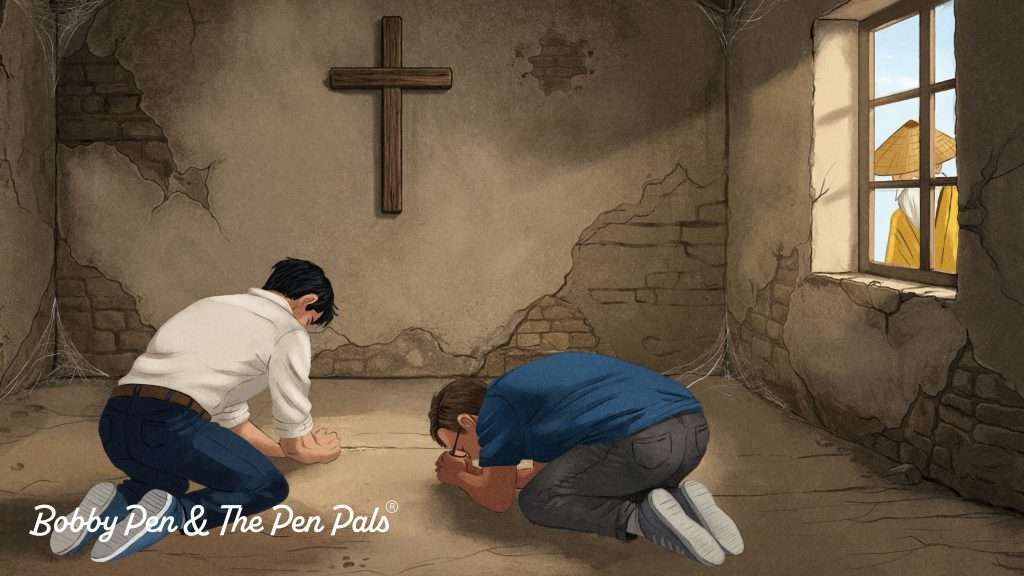
Repentance is the renewal of baptism. Repentance is a contract with God for a second life. A penitent is a buyer* of humility. Repentance is constant distrust of bodily comfort. Repentance is self-condemning reflection, and carefree self-care. Repentance is the daughter of hope and the renunciation of despair. A penitent is an undisgraced convict. Repentance is reconciliation with the Lord by the practice of good deeds contrary to the sins. Repentance is purification of conscience. Repentance is the voluntary endurance of all afflictions. A penitent is the inflicter of his own punishments. Repentance is a mighty persecution of the stomach, and a striking of the soul into vigorous awareness.
* Greek, άγοραστής, the slave who did the shopping.
.
.
.
2. Gather together and come near , all you who have angered God; come and listen to what I expound to you; assemble and see what He has revealed to my soul for your edification. Let us give first place and first honour to the story of the dishonoured yet honoured workers. Let all of us who have suffered an unexpected and inglorious fall listen, watch, and act. Rise and be seated, you who through your falls are lying prostrate. Attend, my brothers, attend to my word. Incline your ears, you who wish to be reconciled afresh with God by a true conversion.
.
.
.
3. Weak as I am, I heard that there was a certain powerful and strange way of life and humility for those living in a separate monastery establishment called ‘The Prison’ which was under the authority of the above-mentioned man, that light of lights. So when I was still staying there, I asked the good man to allow me to visit it. And the great man, never wishing to grieve a soul in any way, agreed to my request.
.
.
.
4. And so, coming to this abode of penitents and to this true land of mourners, I actually saw (if it is not audacious to say so) what in most cases the eye of a careless person never saw, and what the ear of a slothful person never heard, and what never entered the heart of an indolent person (1 Corinthians 2:9) — that is, I saw such deeds and words as can incline God to mercy; such activities and postures as speedily attract his love for men.
.
.
.
5. I saw some of those guilty yet guiltless men standing in the open air all night til morning, and never moving their feet; by force of nature pitifully dazed by sleep, yet they allowed themselves no rest, but reproached themselves, and drove away sleep with dishonour and insults.
.
.
.
6. Others lifted up their eyes to Heaven, and with wailings and outcries, implored help from there.
.
.
.
7. Others stood in prayer with their hands tied behind their backs like criminals; their faces, darkened by sorrow, bent to the earth. They regarded themselves as unworthy to look up to Heaven. Overwhelmed by the embarrassment of their thoughts and conscience, they could not find anything to say or pray about to God, how or with what to begin their prayers. But filled with darkness and a blank despair, they offered to God nothing but a speechless soul and a voiceless mind.
.
.
.
8. Others sat on the ground in sackcloth and ashes, hiding their faces between their knees, and they struck the earth with their foreheads.
.
.
.
10. I saw there some who seemed from their demeanour and their thoughts to be out of their mind. In their great disconsolateness, they had become like dumb men in complete darkness, and were insensible to the whole of life. Their minds had already sunk to the very depths of humility, and had burnt up the tears in their eyes with the fire of their melancholy.
.
.
.
13. And there, friends, the fulfillment of the words of David could be clearly seen, men enduring hardship and bowed down to the end of their life, going about with a downcast face all day long, noisome on account of the corruption of their body’s wounds, and they took no notice of them, (Psalm 37:6-7) and they forgot to eat their bread, and they mingled their drink of water with weeping; they ate dust and ashes with their bread, and their bones cleaved to their flesh, and were withered like grass. (Psalm 101:5-11) You could hear from them nothing but the words: ‘Woe, woe! Alas, alas! It is just, it is just. Spare us, spare us, O Master.’ Some were saying: ‘Have mercy, have mercy,’ and others still more plaintively: ‘Forgive, O Master; forgive, if it is possible.’
.
.
.
14. One could see how the tongues of some of them were parched and hung out of their mouths like a dog’s. Some chastised themselves in the scorching sun, others tormented themselves in the cold. Some, having tasted a little water so as not to die of thirst, stopped drinking; others having nibbled a little bread, flung the rest of it away, and said that they were unworthy of being fed like human beings, since they had behaved like beasts.
.
.
.
15. Where could you see anything like laughter, or idle talking, or irritation, or anger? They did not even know that such a thing as anger existed among men, because in themselves grief had finally eradicated anger. Where among them was gainsaying, or a feast, or audacious speech, or concern for the body, or a trace of vanity, or hope of comfort, or thought of wine, or eating of fruit, or the cheer of cooked food, or pleasing the palate? For even the hope of all such things had been extinguished in them in this present world. Where amongst them is there any care for earthly things, or condemnation of anyone? Nowhere at all!
.
.
.
17. They all used to sit with the sight of death unceasingly before their eyes and say: ‘How will it be with us? What will be our sentence? What kind of end shall we have? Will there be a reprieve for us? Will there be forgiveness for those in darkness, the base, the convicted? Is our prayer powerful enough to enter before the Lord? Or has it not been deservedly rejected, deemed worthless and shameful? And if it did reach the Lord, how much of the divine favour would it gain there? What success would it have? What profit would it bring? What power would it have? Coming from foul lips and bodies, it would not have great power. And so, would it reconcile us with the Judge completely or in part, or even to the extent of half our sores? because they are really great, calling for much sweat and labour and toil. Have our guardian angels drawn near to us, or are they still far from us? And until they come nearer to us, all our labours are futile and useless. For our prayer has not the power of access, nor the wings of purity to reach the Lord, unless our angels approach us and take it and bring it to the Lord.’
.
.
.
18. Some often expressed their doubts to each other and said: ‘Are we accomplishing anything brothers? Are we obtaining our requests? Will the Lord accept us again? Will He open to us?’ And to this others would reply: ‘Who knows, as our brothers the Ninevites said, if God will repent and will deliver us even from great punishment? In any case, let us do our part. And if he opens the door, well and good. And if not, blessed is the Lord God who, in His justice, has closed the door to us. At least let us persist in knocking at the door till the end of our life. Perhaps He will open to us for our great assiduity and importunity.’ (Luke 11:8) Therefore they exhorted one another, saying: ‘Let us run, brothers, let us run. For we need to run, and to run hard, because we have fallen behind our holy company. Let us run, and not spare this our foul and wicked flesh, but let us kill it as it has killed us.’
.
.
.
19. And that is what these blessed ones who had been called to account were actually doing. From the number of their prostrations, their knees seemed to have become wooden, their eyes dim and sunk deep within their sockets. They had no hair. Their cheeks were bruised and burnt by the scalding of hot tears. Their faces were pale and wasted. They were quite indistinguishable from corpses. Their breasts were livid from blows; and from their frequent beating of the chest, they spat blood. Where was to be found in this place any rest on bed, or clean or starched clothes? They were all torn, dirty, and covered with lice. In comparison with them, what are the sufferings of the possessed, or of those weeping for the dead, or of those living in exile, or of those condemned for murder? Their involuntary torture and punishment is really nothing in comparison with this voluntary suffering. I ask you, brothers, not to regard all this as a made-up story.
.
.
.
Often they applied to the great judge, I mean the shepherd, that angel among men, with requests and begged him to put irons and chains on their hands and neck, and to bind their legs tightly in the stocks, and not to set them free until the tomb received them, or not even the tomb.
.
.
.
21. For I shall certainly not hide this most moving humility in these blessed men, and their contrite love for God and repentance. When one of these good inhabitants of the land of repentance was about to go to God and stand before the impartial tribunal, then as soon as he saw that his end was at hand, with adjurations he would beg the great abbot through the superior set over them not to give him human burial, but to fling him, like an irrational beast, into a river bed or to give him up to wild animals in the fields. And this was often done by that lamp of discernment, who would order the dead to be carried out without any psamoldy or honour.
.
.
.
26. Having stayed for thirty days in the Prison, impatient as I am, I returned to the great monastery and the great shepherd. And when he saw that I was quite changed and had not yet come to myself, like a wise man he understood what this change meant and said: ‘Well, Father John, did you see the struggles of those who labour at their task?’ I replied: ‘I saw them, Father, and I was amazed; and I consider those fallen mourners more blessed than those who have not fallen and are not mourning over themselves; because as a result of their fall, they have risen by a sure resurrection.’ ‘That is certainly so,’ he said; and his truthful tongue related to me this story: ‘About ten years ago, I had a brother here who was extremely zealous and active. And so, when I saw that he was so burning in spirit, I trembled for him lest out of envy the devil should trip his foot against a stone as he sped along on his course, as is apt to happen to those who walk swiftly. And that is just what happened. Late one evening he came to me, showed me the open wound, wanted plaster, asked for cauterization, and was very alarmed. Then, when he saw that the doctor did not wish to make too severe an incision (because he deserved sympathy), he flung himself on the ground, embraced my feet, moistened them with abundant tears, and asked to be shut in the Prison which you saw. “It is impossible for me not to go there,” he cried. Finally — a rare and most unusual thing among the sick — he urged the doctor to change his kindness to sternness, and with all haste he went to the penitents, and became their companion and fellow sufferer. The grief that springs from the love of God pierced his heart as with a sword, and on the eighth day he departed to the Lord, asking that he should not be given burial. But I brought him here, and buried him among the fathers, as he deserved, because after his week of slavery, on the eighth day he was released as a free man. And there is one who knows for certain that he did not rise from my foul and wretched feet before he won God’s favour. And no wonder! For having received in his heart the faith of the harlot in the Gospel, he moistened my lowly feet with assurance. All things are possible to him that believeth, said the Lord. I have seen impure souls raving madly about physical love; but making their experience of such love a reason for repentance, they transferred the same love to the Lord; and, overcoming all fear, they spurred themselves insatiably on to the love of God. That is why the Lord does not say of that chaste harlot; “Because she feared,” but: “Because she loved much,” and could easily expel love by love.’
.
.
.
27. I am fully aware, my good friends, that the struggles I have described will seem to some incredible, to others hard to believe, and will seem to some to breed despair. But to the courageous soul they will serve as a spur, and a shaft of fire; and he will go away carrying zeal in his heart. He who is not up to this will realize his infirmity, and having easily obtained humility by self reproach, he will run after the former; and I do not know whether he may not even overtake him. But the careless man should leave my stories alone, lest he despair and squander even the little he has accomplished, and thus correspond to the man of whom it was said: ‘But from him that hath no desire or eagerness, even what he hath will be taken away from him.’ (Matthew 25:29)
.
.
.
28. It is impossible for us who have fallen into the pit of iniquities ever to be drawn out of it, unless we sink into the abyss of the humility of the repentant.
.
.
.
29. The sorrowful humility of the mourning is one thing; the condemnation of the conscience of those who are still living in sin is another; and the blessed wealth of humility, which the perfect attain by the action of God, is yet another. Let us not be in a hurry to find words to describe this third kind of humility, for our effort will be in vain. But a sign of the second is the perfect bearing of indignity. Previous habit often tyrannizes even over him that mourns. And no wonder! The account of the judgements of God and our falls is shrouded in darkness, and it is impossible to know which are falls that come from carelessness, and which from providential abandonment, and which from God’s turning away from us. But someone told me that, in the case of falls which come to us by divine providence, we acquire a swift revulsion from them, because He who delivers us does not allow us to be held for long. And let us who fall wrestle above all with the demon of grief. For he stands by us at the time of prayer, and by reminding us of our former boldness before God, he tries to devastate our prayer.
.
.
.
30. Do not be surprised that you fall everyday; do not give up, but stand your ground courageously. And assuredly, the angel who guards you will honour your patience. While a wound is still fresh and warm, it is easy to heal; but old, neglected, and festering ones are hard to cure, and require for their care much treatment, cutting, plastering, and cauterization. Many from long neglect become incurable, but with God all things are possible. (Matthew 19:26)
.
.
.
33. He who really keeps account of his actions considers as lost every day in which he does not mourn, whatever good he may have done in it.
.
.
.
37. We must carefully consider whether our conscience has ceased to accuse us, not as a result of purity, but because it is immersed in evil. A sign of deliverance from our falls is the continual reckoning of ourselves as debtors.
.
.
.
38. Nothing equals or excels God’s mercies. Therefore, he who despairs is committing suicide. A sign of true repentance is the acknowledgment that we deserve all the afflictions, visible and invisible, that come upon us, and even greater ones. Moses, after seeing God in the bush, returned again to Egypt, that is, to darkness and to the brick-making of Pharaoh, who was symbolical of the spiritual Pharaoh. But he went back again to the bush, and not only to the bush, but also up the mountain. Whoever has known divine vision will never despair of himself. Job became a beggar, but he became twice as rich again.
.
.
.
40. I saw two men traveling to the Lord by the same way and at the same time. One of them was old and more advanced in labours; but the other was his disciple, and soon outran the elder and came first to the sepulchre of humility. (John 20:4)
.
.
.
41. Let all of us, and especially the fallen, beware lest we sicken in heart from the disease of the atheist Origen.* For this foul disease, by using God’s love for man as an excuse, is readily accepted by pleasure-lovers.
* I.e. the heretical doctrine that all would eventually be saved.
.
.
.
42. In my meditation, or rather, in my repentance, a fire of prayer will be kindled consuming that which is material. May the holy convicts mentioned above provide you with a rule, and a pattern, and a model, and a living picture of repentance; and throughout your life, you will need no book at all until Christ the Son of God and God, enlightens you in the resurrection of true repentance. Amen.
Source Credit: The Ladder of Divine Ascent (ISBN 978-0-943405-03-2) Holy Transfiguration Monastery – Brookline, Massachusetts
Coming soon step 6
The Ladder of Divine Ascent
STEP 1 On renunciation of the world
STEP 2 On detachment
STEP 3 On exile
STEP 4 On blessed and ever-memorable obedience
STEP 5 On painstaking and true repentance which constitutes the life of holy convicts; and about the Prison
STEP 6 On remembrance of death
STEP 7 On joy-making mourning
STEP 8 On freedom from anger and meekness
STEP 9 On remembrance of wrongs
STEP 10 On slander and calumny
STEP 11 On talkativeness and silence
STEP 12 On lying
STEP 13 On despondency
STEP 14 On that clamorous mistress, the stomach
STEP 15 On incorruptible purity and chastity, to which the corruptible attain by toil and sweat
STEP 16 On love of money, or avarice
STEP 17 On non-possessiveness (that hastens one Heavenward)
STEP 18 On insensibility, that is deadening of the soul and the death of the mind before the death of the body
STEP 19 On sleep, prayer, and psalmody with the brotherhood
STEP 20 On bodily vigil, and how to use it to attain spiritual vigil, and how to practise it
STEP 21 On unmanly and puerile cowardice
STEP 22 On the many forms of vainglory
STEP 23 On mad pride, and, in the same Step, on unclean blasphemous thoughts
STEP 24 On meekness, simplicity, and guileness which come not from nature but from conscious effort, and about guile
STEP 25 On the destroyer of the passions, most sublime humility, which is rooted in spiritual perception
STEP 26 On discernment of thoughts, passions, and virtues
On expert discernment
STEP 27 On holy stillness of body and soul
Different aspects of stillness and how to distinguish them
STEP 28 On holy and blessed prayer, the mother of virtues, and on the attitude of mind and body in prayer
STEP 29 Concerning Heaven on earth, or Godlike dispassion and perfection, and the resurrection of the soul before the general resurrection
STEP 30 Concerning the linking together of the supreme trinity among the virtues
Disclaimer: This letter is for informational purposes. This is not to be considered medical advice. Although our site may include health & wellness information, nothing on our site is intended to be, and you should not consider anything on our site to be medical, dental, or other professional advice.
HK® | Bobby Pen & The Pen Pals® | All rights reserved.